- Total 0,00 SEK

TREE CLIMBING
Tree climbing operations require specific techniques designed to minimize the high risks that are present during controlled tree felling and pruning operations. The choice of products and techniques must combine the specific working needs of tree climbing, cutting and rigging with the safety conditions required for safely working at heights.
Fig.14 - INSTALLING THE ROPE ON THE TREE
The first operation to be carried out is to launch, in the direction of the chosen anchor point, a small weight to which a cord is attached. The weight with the cord attached can be thrown by hand or launched using a special sling shot. The access rope is then connected to the cord with a special knot and pulled through to the anchor point and installed.
Fig.15 - TECHNIQUES FOR ACCESSING AND MOVING IN THE TREE
First, an access rope is installed from the ground to be used for climbing up into the tree. In some countries the use of a second backup rope is required. Then, for the movement in the tree, a second rope is installed, anchored as high as possible for maximum safety. The use of a cambium saver creates a dedicated anchor point and reduces friction, thus preventing the rope and the tree from damaging each other. The two most popular techniques for access and movement in the tree are:
- Doubled rope technique DdRT / Mobile Rope System MRS (fig.15a)
A climbing technique using a doubled rope that moves constantly between the anchor and the operator: the end of the rope and the adjustment device are connected directly to the worker. - Single Rope Technique SRT / SRS Stationary Rope System (fig.15b)
A climbing technique which involves the use of a rope anchored to a fixed point in the tree, or at the base of the tree. The rope is fixed, and the operator moves along the rope.
Fig.16 - PRUNING AND CONTROLLED FELLING
During cutting operations, the operator must use two independent safety systems. When using a chainsaw, it is recommended to use a steel cable positioning system that offers increased resistance to cutting (fig.16a). Controlled felling is a technique used to remove sections of a tree that cannot be felled in the traditional way by dropping the tree to the ground due to the presence of structures, power lines, or other sensitive elements in the drop zone or working area (fig.16b).
Recommended by us:
-

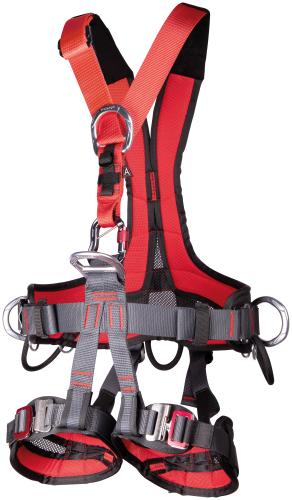
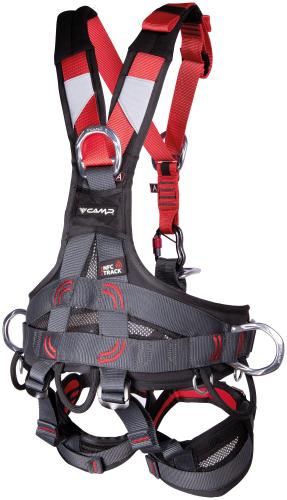
Full Body Harness Golden Top Evo Alu
Ergonomic and very comfortable harness for universal use. Max weight 150 kg. ( 2 sizes)
094122-1
2 sizes -
Rope Adjustment Device - Giant
Unique and very compact multi-function rope adjustment device with wide range of applications. Max load 250 kg.
0997
2 Colours -
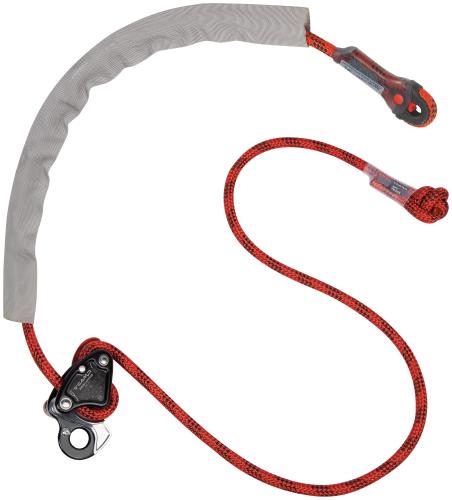
Druid Lanyard (without carabiners)
Incredibly versatile adjustable lanyard thanks to the many certifications: EN358, EN795/B, EN795/C, EN353-2, EN341/2A, EN12841/C.
351702
5 lengths -
Rope Grab/Ascender Goblin
Innovative fall arrester/ascender with locking-funktion. With carabiner 1455.
099901
-
Safety helmet Ares Air
Ventilated safety helmet with perfect balance, for work at height and rescue. Turn dial adjustment in and holders for visor, headlamp and ear muffs.
0748-7
5 colours -
Descender Druid
Small and compact descender for rope access and rescue work.
2232
-
Iridium 11mm on running meter
Semi-static rope for fall arrest and rescue applications. Highest quality and superior strength.
2811-6001
5 colours -
Iridium 11mm whole roll (200m)
Semi-static rope for fall arrest and rescue applications. Highest quality and superior strength.
2811-2001
5 colours -
Iridium White/Black 10.5mm whole roll (200m)
Semi-static rope for fall arrest and rescue applications. Highest quality and superior strength.
2810-2001
-
Positioning Lanyard No-Cut
Adjustable work positioning lanyards with a zinc-plated anti-cut 8 mm diameter steel cable core.
206106
2 lengths -
Accessory bag-Spacecraft-2,5L
Accessory bag constructed from Tarpaulin PVC 500D. Can be fitted on your harness.
2792
-
Anchor Sling - Herbol Cambium Saver 1,2m
A soft anchor system designed to create anchor points from tree branches or around horizontal man-made structure.
214002
-
Ascender Turbohand Pro - Left
Turbohand Pro ascender with its petented roller is a top of the line product for maximizing efficiency while ascending ropes.
2635-L2
-
Ascender Turbohand Pro - Right
Turbohand Pro ascender with its patented roller is a top of the line product for maximizing efficiency while ascending ropes.
2635-R1
-
Bucket bag-Wagon-10L
Bucket bag for carrying and hauling tools. Constructed from robust Tarpaulin PVC 500D with high-frequency welding.
2783
-
Bucket bag-Wagon-20L
Bucket bag for carrying and hauling tools. Constructed from robust Tarpaulin PVC 500D with high-frequency welding.
2784
-
Chest Ascender - Turbochest
A revolutionary chest ascender that features two proprietary rollers for a smooth interface with the rope.
2256
2 Colours -
Chest Harness GT Pro
Chest Harness for Access, GT and Tree Access EVO sit harnesses. Max weight 150 kg. (2 sizes)
216602-2
2 sizes -
Chest Harness Tree Access SRT
A top-level accessory chest harness designed to deliver maximum efficiency and performance for SRT maneuvers.
3126
-
Cord
Strong cords for various applications.
0817
7 sizes -
Foot Ascender Turbofoot EVO -Left
Foot ascender with integrated rollers deliver incomparable efficency during climbing and low wear-and-tear on both the rope and on the ascender.
3262
-
Foot Ascender Turbofoot EVO -Right
Foot ascender with integrated rollers deliver incomparable efficency during climbing and low wear-and-tear on both the rope and on the ascender.
3261
-
Foot Loop - Turboloop
Easy adjustable foot loop for rope ascent.
0726
-
Positioning Lanyard Gyro Lanyard Double 3,5m
Tree climbing lanyard that combines two length adjustment systems into a single connection point with the innovative Gyro X3 swivel device.
348601
3 lengths -
Positioning Lanyard Gyro Lanyard Single 2m
A versatile and innovative tree climbing lanyard that integrates the exclusive Gyro swivel for exceptional freedom of movement.
348401
3 lengths -
Positioning lanyard Gyro Lanyard Twin 5m
The Gyro Lanyard Twin is an exceptionally versatile double connection lanyard system for tree climbing.
348501
-
Ridgid Seat Access Swing
Comfortable and light-weight seat for rope access work.
1963
-
Sit Harness - Tree Access Evo
Professional sit harness for tree climbers. Max weight 150 kg. (2 sizes). EN813, EN358
2163T-1
2 sizes -
Sit Harness - Tree Access ST
The perfect tree climbing sit harness for professionals looking for maximum versatility combined with exceptional comfort. EN813, EN358
3125-1
2 sizes -
Swivel - Enigma 3-Lock
Openable swivel with one 3-Lock carabiner.
3483
-
Swivel Gyro 1 25kN
The Gyro 1 delivers maximum freedom of movement in a compact size with a robust design.
3260
-
Swiveling Anchor Gyro3 26kN
A compact and extremely versatile rigging system featuring our proprietary triple swivel design.
2940
-
Tool Carabiner HUB
Detachable plastic carabiner for carrying tools on a harness.
0910
-
Tool lanyard-Sawer-10kg
A bungee rewind lanyard designed to attach chainsaws and other tools to a harness.
2151
-
Turboknee System
Incredibly efficient knee ascender system for SRT tree climbing.
3127
-
Turbospur System
The Turbospur System allows for the installation of the Turbochest ascender on tree climbing spurs.
3501